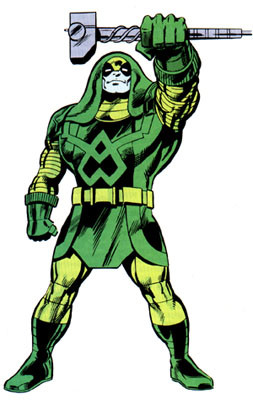
Ronan the Accuser: Unpacking His Villainous Quest in Guardians of the Galaxy
The Marvel Cinematic Universe is teeming with complex antagonists, but few left an immediate, visceral impact quite like Ronan the Accuser in the 2014 blockbuster, *Guardians of the Galaxy*. Portrayed with menacing gravitas by Lee Pace, Ronan wasn't just another superpowered villain; he was a zealous ideologue, driven by a deeply personal and generational hatred that set him on a destructive path. His villainous quest in the *ronan guardians of the galaxy movie* is a masterclass in fanaticism, demonstrating how unwavering conviction, when twisted, can threaten entire civilizations.
Ronan's story is rooted in the ancient conflict between the Kree Empire and the Nova Empire, specifically their homeworld, Xandar. For centuries, these two galactic powers were locked in a brutal war, a conflict that deeply scarred Ronan and his people. When a peace treaty was finally brokered, Ronan, a high-ranking Kree Accuser, viewed it not as a path to healing, but as a betrayal of his ancestors, a capitulation that dishonored the Kree who had died fighting Xandar. This profound sense of grievance transformed him into a relentless extremist, utterly unwilling to accept peace. His entire being was consumed by the desire for retribution, making him a formidable, unyielding foe.
The Uneasy Alliance: Ronan's Deal with Thanos and the Hunt for the Orb
Driven by his singular obsession to eradicate Xandar, Ronan made a perilous pact with the Mad Titan, Thanos. The terms were clear: Ronan would retrieve the enigmatic Orb, a powerful artifact coveted by Thanos, and in return, Thanos would deliver Xandar to Ronan for annihilation. This alliance, however, was born out of convenience and mutual, albeit divergent, ambition, rather than any genuine camaraderie. Thanos saw Ronan as a disposable pawn, referring to him dismissively as "boy" and chastising him for his "pouting child" demeanor and boring politics. This interaction immediately establishes the power dynamic, with Thanos holding the ultimate authority.
Ronan's initial quest for the Orb led him to Peter Quill, Gamora, and eventually the entire nascent Guardians team. Little did he know, the Orb contained an Infinity Stone – specifically, the Power Stone. This revelation proved to be a pivotal moment, shifting the entire trajectory of Ronan's villainous journey. Upon learning of the Stone's immense power, Ronan's loyalty to Thanos fractured. He realized that with the Power Stone at his command, he no longer needed Thanos's assistance. He could achieve his goal of Xandarian genocide, and perhaps even challenge Thanos himself. This audacious rebellion, fueled by newfound power and unbridled ambition, marked Ronan as a true force to be reckoned with. For a deeper dive into this dramatic turn, explore
Ronan's Rebellion Against Thanos in Guardians of the Galaxy Explored.
Ronan's defiance culminated in a chilling confrontation with Thanos's envoy, The Other. Blaming Gamora for complications in retrieving the Orb, Ronan was met with swift rebuke, reminding him that Gamora was under his charge. Without hesitation, and demonstrating his extreme ruthlessness, Ronan used his Cosmi-Rod to brutally execute The Other, sending a clear message to Thanos: he was no longer a servant, but a rival. He then directly challenged Thanos, proclaiming his intent to destroy Xandar and then come for the Mad Titan himself. This move solidified his transformation from a vengeful Kree Accuser to an Infinity Stone-wielding cosmic threat.
The Climax on Xandar: Confronting the Guardians of the Galaxy
With the Power Stone embedded in his Cosmi-Rod, Ronan became virtually unstoppable. He descended upon Xandar with his dark fleet, delivering a terrifying ultimatum: "Xandar, you stand accused! Your wretched peace treaty will not save you now. It is the tinder on which you burn." His intention was clear: complete annihilation. The might of the Nova Corps proved insufficient against the raw power of the Infinity Stone.
It was up to the unlikely heroes, the Guardians of the Galaxy, to make their stand. The final confrontation in the *ronan guardians of the galaxy movie* is a testament to the power of unity and unconventional heroism. Ronan, wielding the Stone, was a god-like figure, seemingly impervious to attack. He initially scoffed at the Guardians, mocking their mortality and inability to comprehend the power he held. "You're mortal! How..." he questioned, genuinely bewildered when Peter Quill and his team managed to channel the Stone's energy together.
The turning point, however, came from the most unexpected source: Peter Quill's audacious dance-off challenge. In a moment of pure improvisation and comedic genius, Quill distracted Ronan by busting out some dance moves to "Ooh Child," effectively buying precious seconds. "Dance-off, bro. Me and you," Quill declared, utterly perplexing Ronan. This bizarre yet brilliant tactic created the crucial opening the Guardians needed. As Ronan stood bewildered, Rocket fired a powerful shot, dislodging the Power Stone from Ronan's staff.
What followed was a remarkable display of teamwork and sacrifice. Quill, grabbing the falling Stone, began to succumb to its immense power. But Gamora, Drax, and Rocket, without hesitation, rushed to his side, linking hands to help him bear the burden. This collective act of courage and selflessness allowed them to harness the Stone's energy. With their combined will, they turned the Power Stone against Ronan himself, obliterating the zealous Accuser in a devastating blast. This dramatic defeat, spearheaded by the very "guardians of the galaxy" Ronan had mocked, underscores the film's core theme: that even disparate individuals can achieve extraordinary things when they come together. To understand how this iconic victory unfolded, read
Ronan's Downfall: How the Guardians of the Galaxy Triumphed.
Legacy of Destruction: Ronan's Impact on the MCU and the Guardians
While Ronan the Accuser met his end in the first *Guardians of the Galaxy* movie, his impact reverberates throughout the MCU. He served as a crucial early antagonist, not only establishing the Guardians as formidable heroes but also introducing the cosmic side of the Marvel universe and the terrifying power of the Infinity Stones. His relentless pursuit of vengeance highlighted the deep-seated political and historical conflicts that plague the galaxy, adding layers of realism to the fantastical setting.
Lee Pace's portrayal of Ronan was instrumental in making the character memorable. Despite the heavy makeup and prosthetics, Pace conveyed a chilling blend of fanaticism, arrogance, and unwavering resolve. He made Ronan a truly menacing figure, whose convictions, however misguided, felt undeniably real. Ronan's initial appearance in *Captain Marvel*, set years before *Guardians of the Galaxy*, further cements his role within the Kree hierarchy and provides a glimpse into his earlier, less extreme, yet still dedicated, self.
Ultimately, Ronan the Accuser's villainous quest in the *ronan guardians of the galaxy movie* is a cautionary tale about the destructive power of unyielding hatred and ambition. He was a character defined by his past, unable to move beyond ancient grievances. His refusal to accept peace, his betrayal of Thanos, and his single-minded pursuit of Xandar's destruction led directly to his downfall. He pushed the newly formed Guardians of the Galaxy to their limits, forcing them to unite and discover their true potential, ironically solidifying their identity as the very protectors he sought to destroy. His defeat was not just a triumph of good over evil, but a testament to the unexpected strength found in compassion, cooperation, and even a well-timed dance-off.